
The Founder Who Never Wanted to Fit In

A story about leadership, global ambition, and the personality type psychiatrists call “otrovert.”
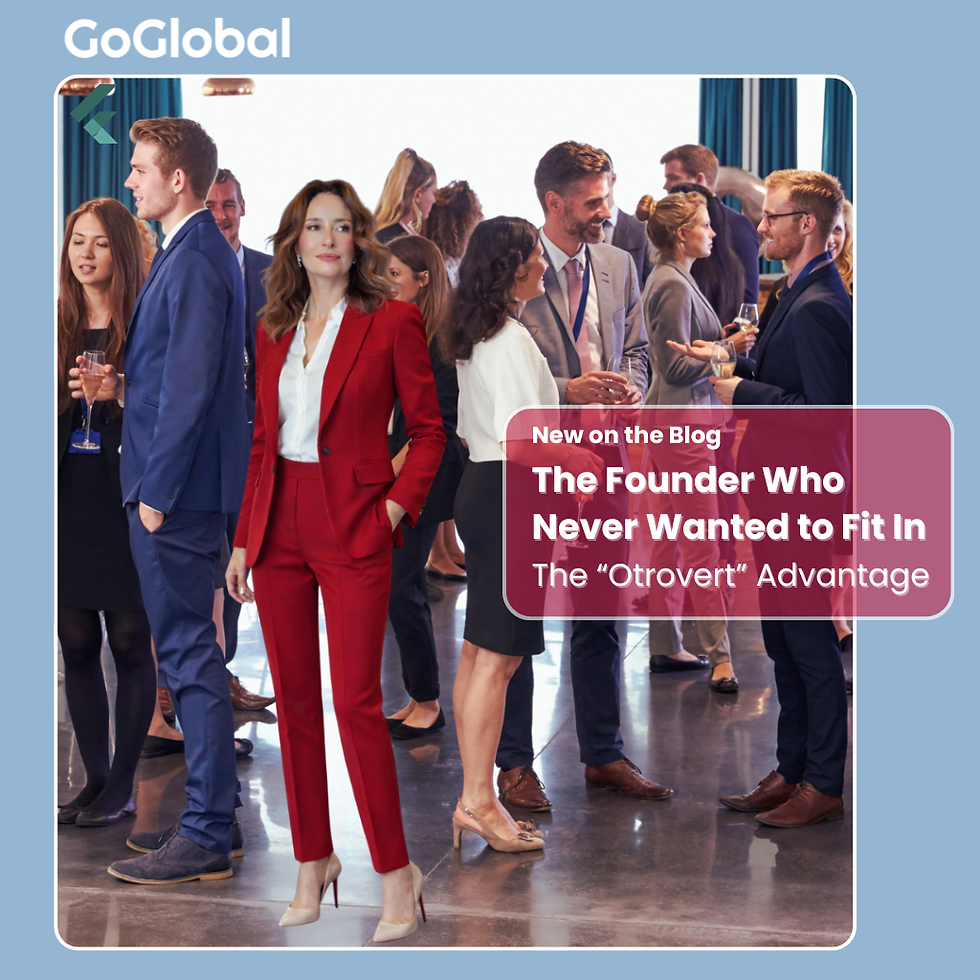
There’s a moment I know too well.
It usually happens in a room full of smart people—investors, founders, corporate leaders, ecosystem builders. The lighting is perfect. The coffee is overpriced. Someone is saying something like “We’re building community!” with the kind of enthusiasm that makes other people nod automatically.
And I’m smiling. I’m present. I’m engaged.
But inside?
I’m watching.
Not in a judgmental way. More like… I’m scanning the room the way founders scan markets. Where’s the real signal? Who’s performing? Who’s actually building? Who’s listening? Who’s trying to be seen? Who’s quietly carrying something brilliant?
It’s not that I don’t like people. I do. I truly do.
But I’ve never been the type to merge into a group identity just because the room wants me to.
I’ve always been… a little “other.”
And for a long time, I thought that was a flaw.
The First Time I Realized “Belonging” Was Optional
Back in the early days—before “startup ecosystem” became a thing people said on panels—I was building one of Turkey’s first e-commerce ventures. No playbook. No cheering crowd. No templates. No founder-friendly infrastructure.
Just a problem to solve… and the stubborn desire to solve it anyway.
What I didn’t understand then—but I understand now—was that entrepreneurship doesn’t just require vision.
It requires emotional independence.
Because when you’re early, you are constantly confronted with social gravity:
“That’s not how things are done here.”
“Why would anyone buy online?”
“This will never work.”
“Be realistic.”
People don’t even mean harm. Society prefers familiar things. It rewards what it recognizes.
And yet… founders don’t build what exists. They build what should exist.
To do that, you have to tolerate the discomfort of being the outlier—the one who doesn’t quite fit the room’s consensus.
In other words, the founder is often the person brave enough to be “the other.”
Networking Never Felt Like Networking to Me
Fast forward.
I’ve lived in LA & Miami for years. I’ve worked across continents. I’ve advised founders, investors, and institutions. I’ve sat in rooms where global capital moves quietly, and rooms where everyone talks as if capital moves because of their keynote.
People often describe me as outgoing, confident, and well-connected.
And yes—I can talk to anyone.
But here’s the truth: I’ve never been interested in collecting people.
I’ve been interested in connecting people.
That’s a very different energy.
Some people go to events to feel included. Some go to events to expand status.
Some go because they fear missing out.
I go because I’m listening for alignment.
I’m searching for the founder who needs one introduction to change their trajectory. The investor who will actually follow through. The corporate leader who wants innovation—not just a LinkedIn photo with a pitch deck.
I don’t attach myself to crowds.
I build bridges.
And bridges don’t belong to either side. They just do their job.
Why I’m Great in Rooms… and Still Feel Separate
If you’ve ever watched someone who seems socially confident, but somehow never becomes “part of the gang,” you know what I mean.
I can be invited, welcomed, included.
And still feel like I’m standing half a step outside the circle.
Not because I’m insecure.
Because I’m not wired for group bonding as a goal.
I’m wired for meaning.
I’ll spend hours with one founder talking about their fears, their vision, their financing strategy, and their market entry. I’ll help them rebuild their story until it finally clicks—until they believe it again.
And then I’ll walk into a big event and feel absolutely nothing for the collective enthusiasm of it all.
Because my brain isn’t looking for belonging.
It’s looking for truth.
The Entrepreneurial Edge Nobody Talks About
Here’s the thing: what looks like “distance” is often a form of strength.
Entrepreneurs who don’t obsess over belonging tend to do a few things exceptionally well:
They don’t confuse noise with momentum. They can sit in the middle of hype and still ask, “But what problem are we solving?”
They don’t chase approval. They build. They ship. They learn. They repeat.
They’re immune to groupthink. Which is basically a survival skill in a world where trends spread faster than truth.
And that’s why some of the most impactful people are not natural joiners.
They’re builders.
A Pattern I’ve Seen Across Every Ecosystem
Over time, I started noticing something strange.
Whether in the U.S. or Europe or MENA… whether I’m speaking with diaspora founders, first-time entrepreneurs, women building against the odds, or global investors—the strongest founders often share a quiet trait:
They don’t need the room to understand them.
They’re not trying to be “in.”
They’re trying to be right.
Not in an arrogant way—in a grounded way. They want their work to matter.
They can collaborate, but they don’t dissolve. They can belong, but they don’t chase belonging.
They don’t “blend.”
They lead.
The Moment It Finally Had a Name
Then I came across a term that made me pause: otrovert.
It’s a newer personality concept coined by New York psychiatrist Dr. Rami Kaminski, describing people who feel like outsiders in group settings, even when they’re socially capable—and who prefer depth over group affiliation.
The term draws from otro (Spanish for “other”) and speaks to “otherness” not as dysfunction, but as a personality orientation.
And suddenly, something clicked in a way that “introvert vs extrovert” never captured.
Because this isn’t about energy.
This is about identity.
Kaminski describes otroversion as a kind of resistance to merging your identity with the group—an ability to stay emotionally independent from collective pressures.
When I read that, I thought:
That’s not just me. That’s my entire entrepreneurial life.
What If “Not Belonging” Is a Superpower?
In a world obsessed with community, tribe, and identity politics—otroverts can look like they’re “not participating.”
But they are.
They’re participating differently.
They’re not bonding with the group. They’re bonding with the mission.
They’re not joining movements. They’re creating outcomes.
They’re not obsessed with being seen. They’re obsessed with building something worth seeing.
And when I look back at my journey—from early e-commerce to global advisory, from mentoring founders to building bridges across ecosystems—I realize this:
I never needed to belong.
I needed to build.
Why This Matters for Founders
If you’re reading this and thinking, “That sounds like me,” here’s what I want you to know:
You don’t have to force yourself into rooms that require you to shrink, blend, or perform belonging.
You can walk into a room, contribute value, connect deeply with the right people… and leave without becoming part of the “inner circle.”
Because founders aren’t here to be absorbed by the crowd.
Founders are here to shift the crowd.
And maybe the reason some of us build what others don’t… is because we were never fully hypnotized by what everyone else wanted.
We stayed “other” enough to see differently.
That’s not loneliness.
That’s leadership.
That’s entrepreneurship.
That’s… otrovert.


Comments